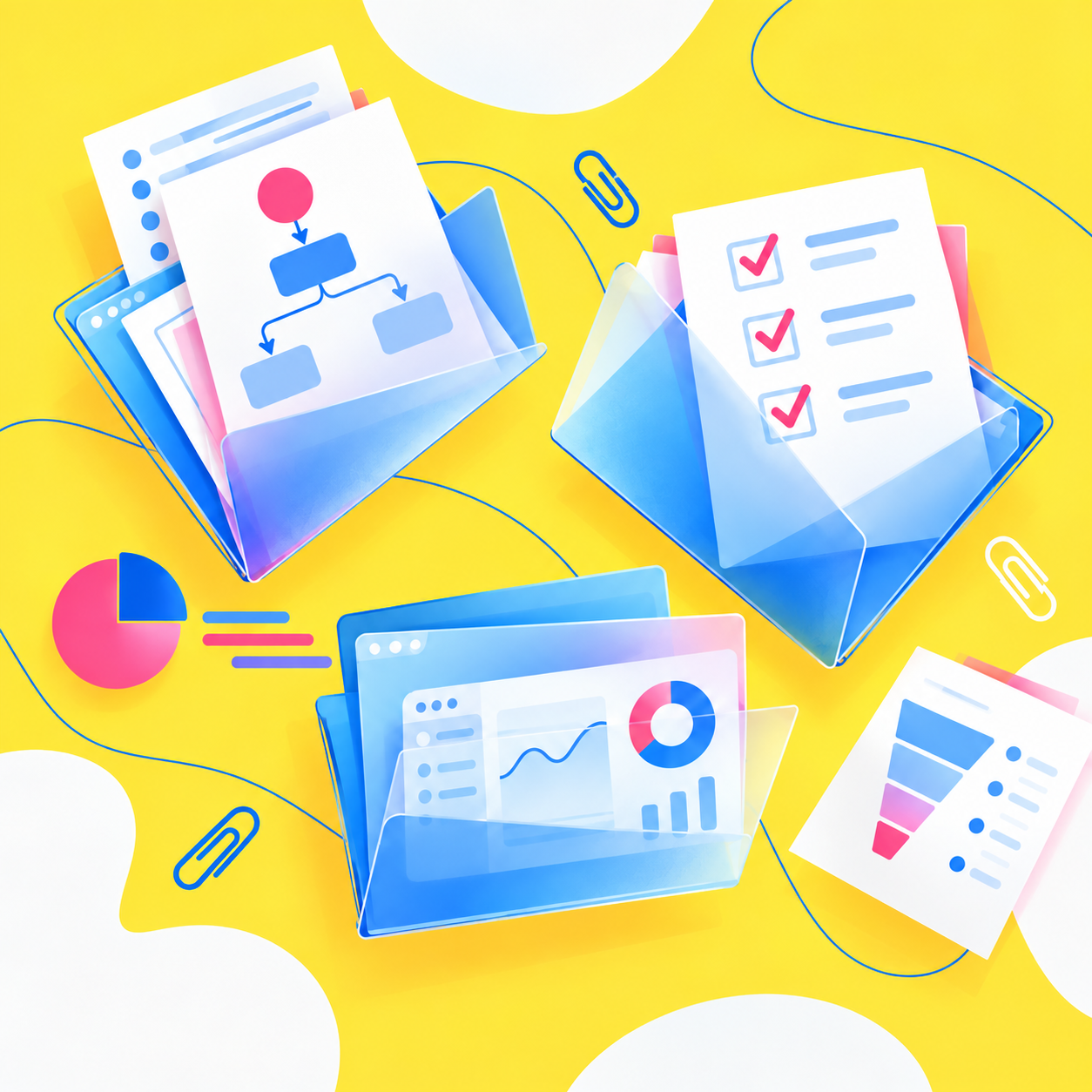




Most products begin with an idea, a problem and a list of features. Without a clear product design process, priorities can conflict and assumptions may remain untested.
A structured product design process helps teams create something useful, intuitive and valuable. At Brucira, our services connect strategy, research, UX/UI design, prototyping and engineering.
What Is Product Design?
Before exploring the stages, it helps to understand what is product design.
Product design identifies a user problem and develops a solution that works for users, businesses and technology. It may involve an app, website, software platform, physical product or product packaging design experience.
1. Understand the Product Idea
The product design process often begins with a broad request such as, “We need an app.”
The team must clarify the business goal, user need and technical context. Sometimes, the right solution is a simpler flow rather than a new product.
2. Research Users and the Market
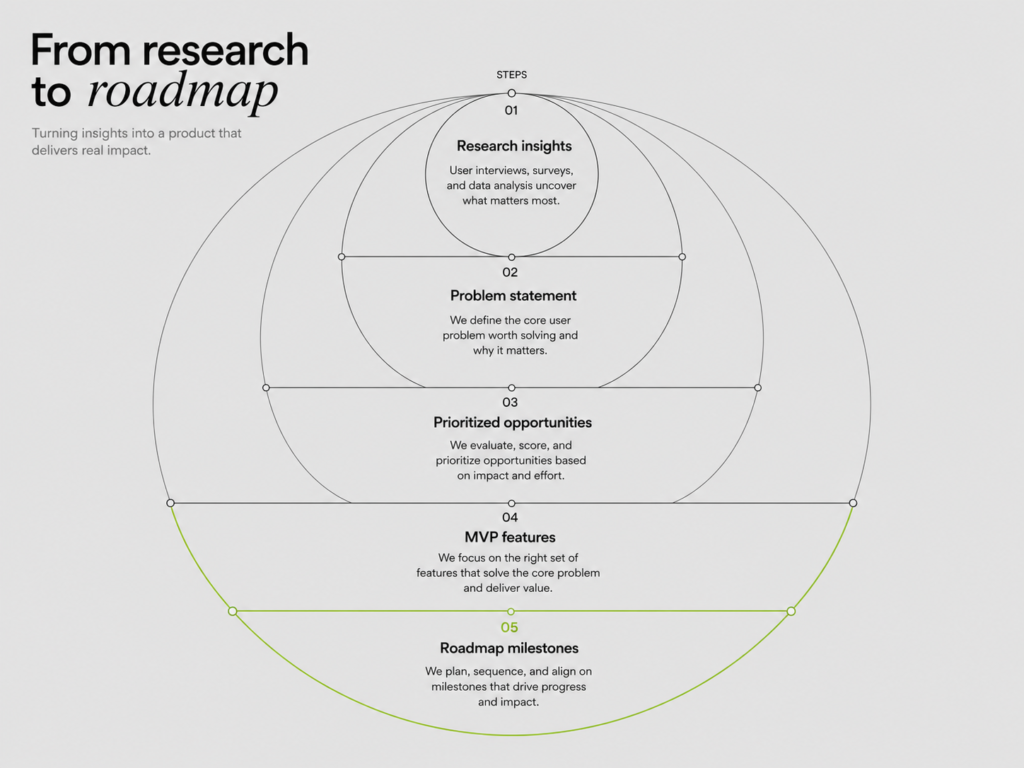
Good products are based on evidence. User research reveals what people want to achieve and what frustrates them.
Market analysis shows what competitors do well and where opportunities remain. A strong product design process combines user needs with business opportunities.
3. Define the Real Problem
Research may reveal several opportunities. The next step is creating a focused problem statement identifying the user, their goal and the barrier they face.
For example:
“Busy grocery shoppers need a faster way to discover relevant products because navigating large catalogues makes quick ordering difficult.”
This guides later decisions in the product design process.
4. Build the Product Strategy
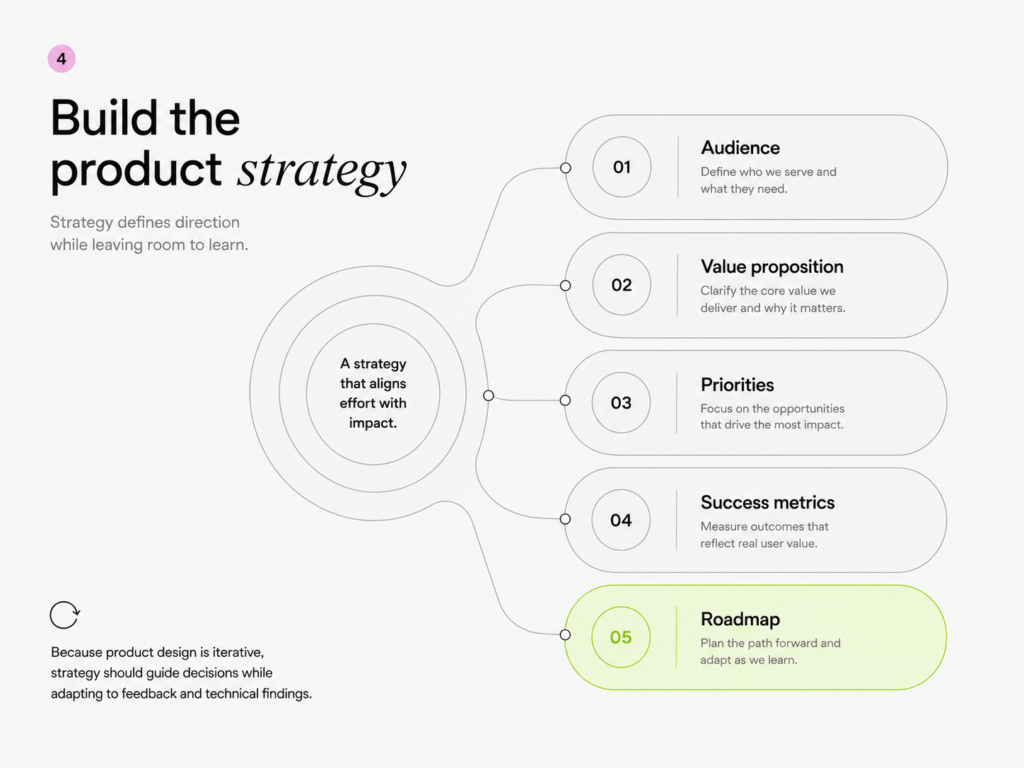
Product strategy defines the audience, value proposition, priorities, success metrics and roadmap.
Because product design is iterative, the strategy should provide direction while allowing teams to respond to feedback and technical findings.
5. Prioritise Features and Scope
Teams usually have more ideas than they can build. The goal is to define the smallest useful version, often called an MVP.
Features should be prioritised according to user value, business impact, effort and evidence. Additional capabilities can be added later instead of delaying the product launch.
6. Map User Flows and Structure
A user flow maps the steps someone takes to complete a task. Information architecture defines how pages, content and navigation are organised.
How Brucira Applied This to Zepto
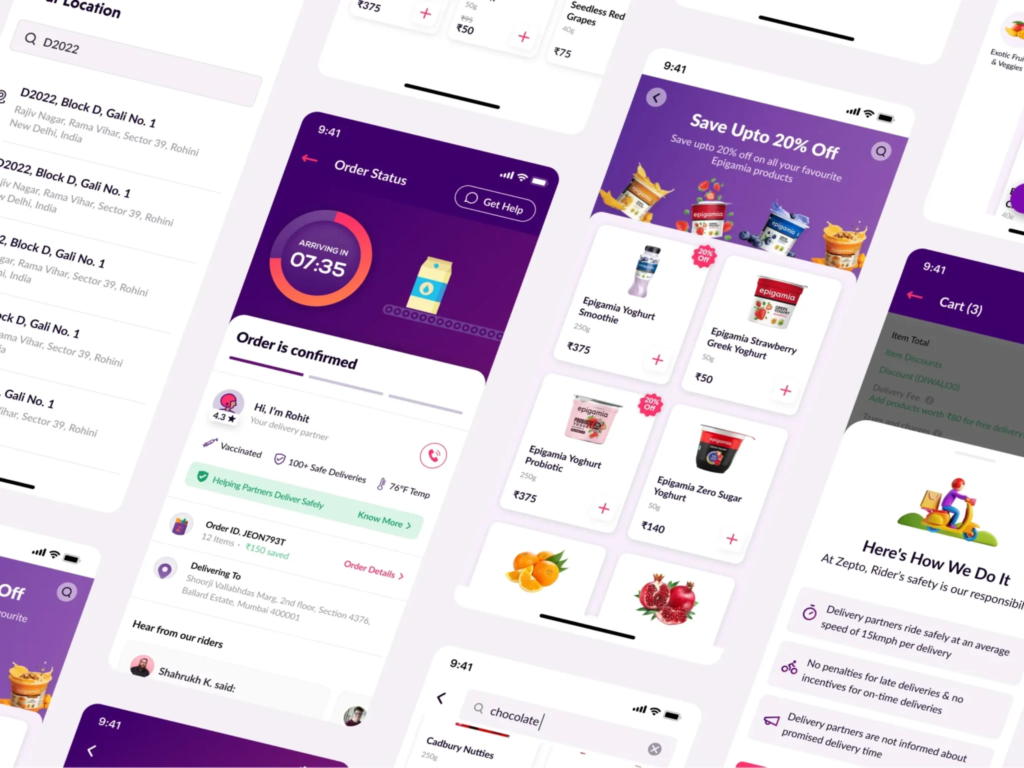
Brucira partnered with Zepto to improve product discovery while maintaining a simple delivery experience.
We clarified category navigation, strengthened product suggestions and created a scalable homepage. This contributed to a 10% increase in search volumes and a 7% increase in average cart value.
Zepto Co-founder and CTO Kaivalya V. said:
“Their attention to detail and creativity turned our vision into beautiful and functional designs.”
7. Create Wireframes and Prototypes
Wireframes translate the product structure into simplified screens. They can then become interactive prototypes that users and stakeholders test.
This keeps the product design process iterative and identifies issues before development.
Simplifying Chizel Prints
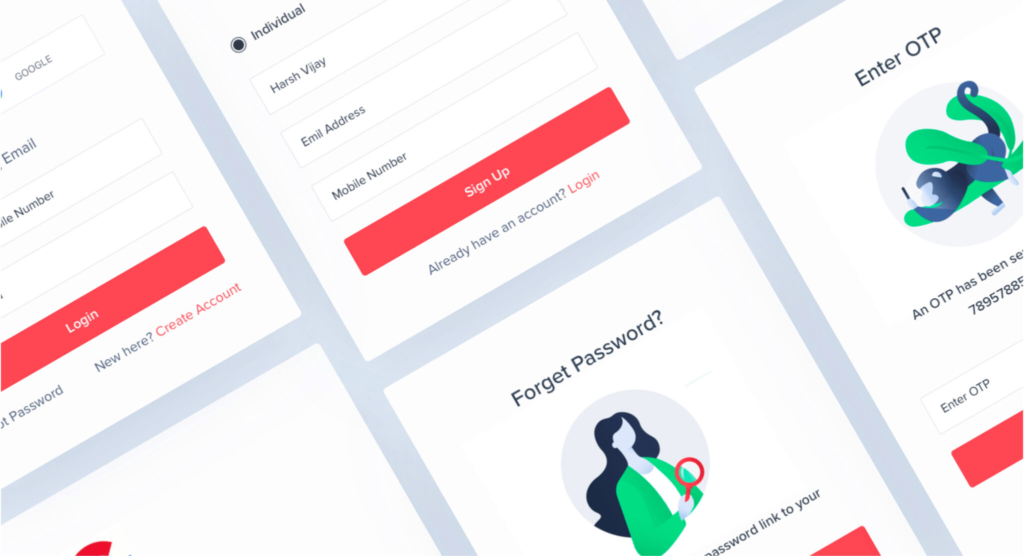
Chizel Prints needed to simplify file uploads, material selection and production coordination.
Brucira created a paperless flow that reduced the process from seven days to three, lowered costs by 40% and enabled six times more weekly contracts.
Co-founder Yash Rane explained:
“The cycle is now cut down to 3 days instead of 7.”
8. Build the Visual System
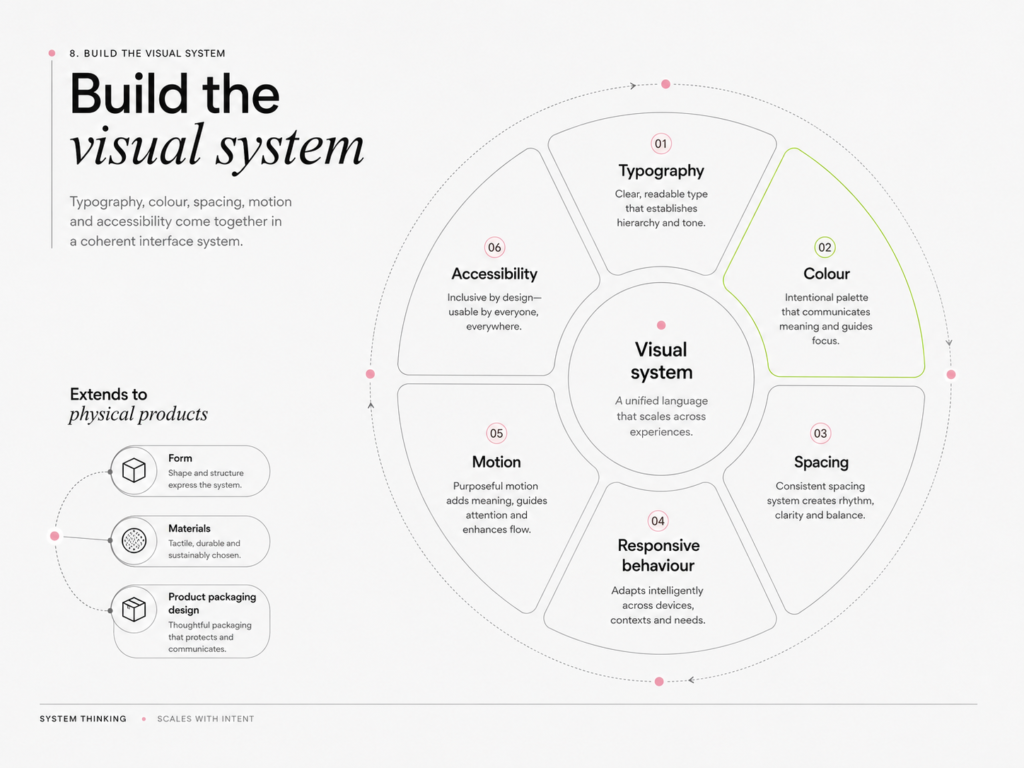
Once tested, wireframes evolve into high-fidelity interfaces. This stage covers typography, colour, spacing, responsive behaviour, motion and accessibility.
For physical products, the same thinking extends to form, materials and product packaging design.
9. Develop, Test and Launch
A product must be developed and tested before launch.
Teams should check interactions, responsiveness, performance, accessibility and error handling. Brucira’s engineering services keep strategy, design and implementation connected throughout the product design process.
The product launch is when teams begin learning from real users.
What Happens After Launch?
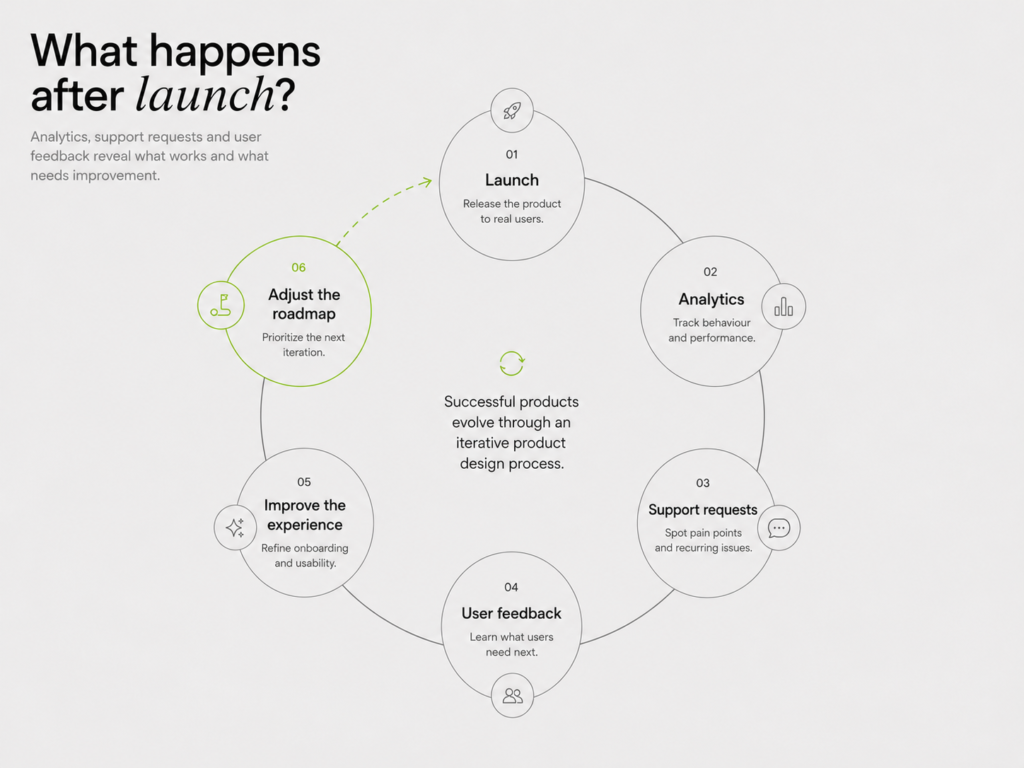
Analytics, support requests and user feedback reveal what works and what needs improvement.
Teams may refine onboarding, address usability issues or adjust the roadmap. Successful products evolve through an iterative product design process.
Final Thoughts
A successful product begins with clarity about the user, problem and value it should deliver.
The product design process provides a structured path from research and strategy to prototypes, development and product launch.
Have a project in mind? Reach out to us at hello@brucira.com.
Want more insights? Browse our blogs here and explore our portfolio of projects.
FAQs
Q1: What is the product design process?
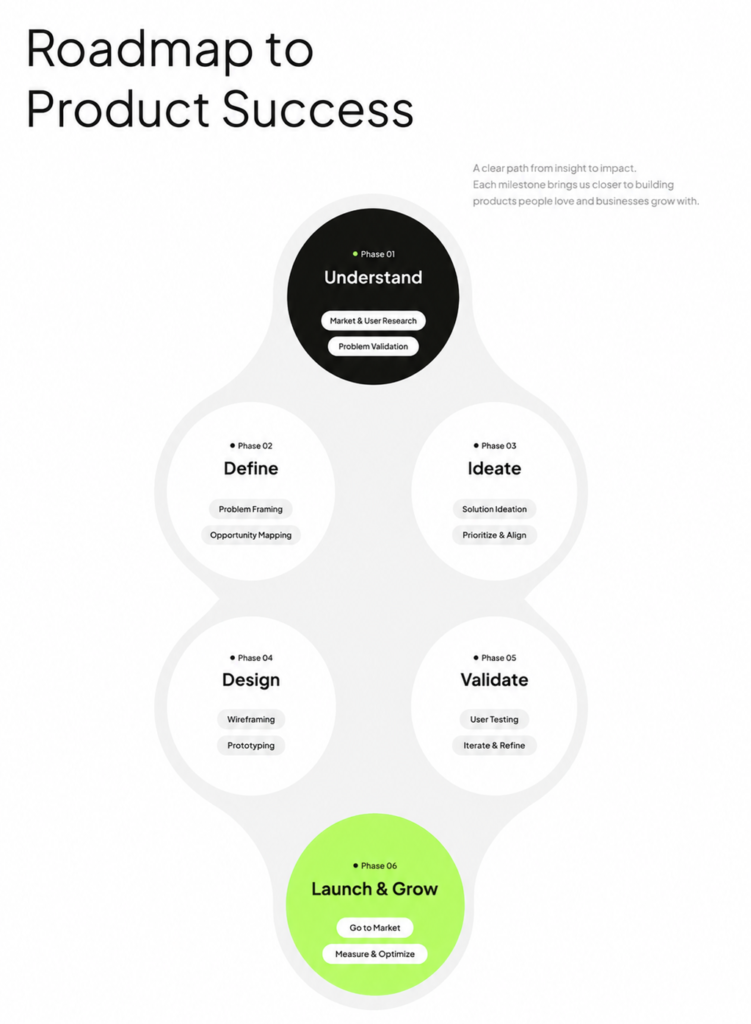
The product design process turns an idea into a useful product through research, strategy, design, prototyping, testing and development.
Q2: What are the main stages of the product design process?
The stages include defining the idea, researching users, identifying the problem, building a strategy, prioritising features, prototyping, designing, testing and launching.
Q3: How long does the product design process take?
It may take a few weeks or several months depending on complexity, scope and technical needs.
Q4: Why is user research important in the product design process?
User research replaces assumptions with evidence. It helps teams understand behaviour, define the right problem and prioritise valuable features. Brucira’s guide to UX research tools explains how teams can gather these insights.
Q5: How do you measure the success of a product design?
Success can be measured through conversion, adoption, retention, satisfaction, task completion and error rates.