




A brand may be recognised by its logo, but it is remembered through its language, colours and consistency.
Professional brand identity services turn a company’s purpose, positioning and personality into a practical system for websites, products, campaigns, packaging and communication. At Brucira, the process can combine research, strategy, messaging, visual identity, illustration, iconography and motion design.
So, what should a brand identity agency deliver?
What Is Brand Identity?
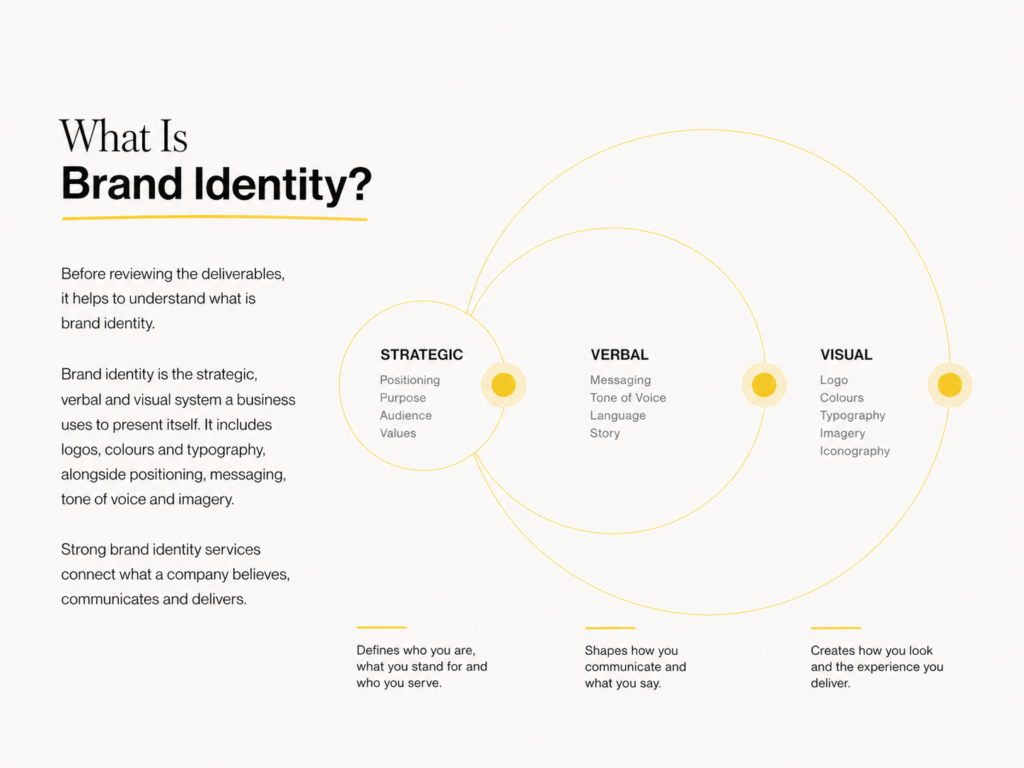
Before reviewing the deliverables, it helps to understand what is brand identity.
Brand identity is the strategic, verbal and visual system a business uses to present itself. It includes logos, colours and typography, alongside positioning, messaging, tone of voice and imagery. Strong brand identity services connect what a company believes, communicates and delivers.
1. Brand Discovery and Research
The process begins with understanding the business through leadership interviews, customer research, competitor reviews and an audit of the existing brand.
Research prevents brand identity services from being guided only by personal preference. Decisions can instead reflect customer expectations, market gaps and business goals.
2. Brand Strategy
Brand strategy defines what the company stands for and where it is going. It may cover purpose, vision, mission, values, audience and long-term direction.
These elements guide future decisions and support the wider brand marketing strategy.
3. Brand Positioning
Positioning defines the space a brand wants to occupy in the customer’s mind. It explains who the business serves, what problem it solves and why people should choose it.
A clear positioning statement gives a brand identity design agency focused direction.
4. Audience Profiles
A brand cannot communicate effectively without knowing its audience.
Audience profiles organise research around customer needs, behaviours, motivations and expectations. These insights help brand identity services determine whether the brand should feel authoritative, energetic, reassuring, premium or approachable.
5. Brand Messaging
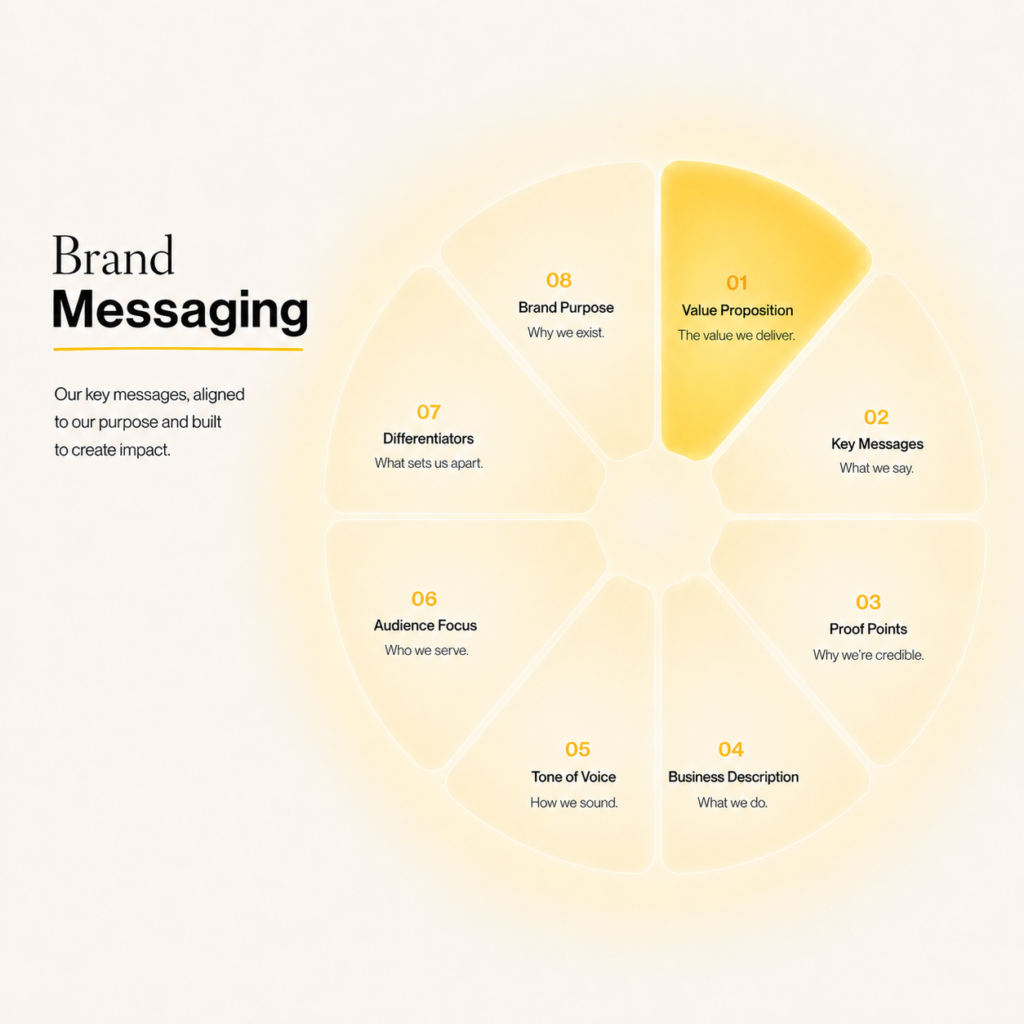
Brand messaging translates strategy into ideas the company communicates consistently. It may include the value proposition, key messages, proof points and a concise business description.
Teams should receive language they can adapt across websites, presentations and campaigns without changing the brand’s central meaning.
6. Tone of Voice
Tone of voice defines how the brand sounds. It may be confident without becoming aggressive, friendly without becoming casual or technical without becoming difficult to understand.
A useful guide includes writing principles, examples, preferred terms and phrases to avoid.
7. Logo System
A logo should be designed as a system rather than delivered as one file. The package may include primary and secondary versions, monochrome options and sizing and spacing rules.
Professional brand identity services also explain how the logo should work across screens, social profiles, printed material and large-format applications.
Refining Cashfree Payments’ Identity

When Cashfree became Cashfree Payments, it needed a renewed logo that felt bold and modern without losing recognition.
Brucira worked with its leadership and founding teams to create a clearer, more scalable identity while retaining the original essence. The project shows how brand identity services can modernise an established business without disconnecting it fro customers.
8. Colour Palette
Colour supports recognition and influences how a brand feels.
A colour system should define primary, secondary and supporting colours, along with accessibility and usage rules. Strong brand identity services consider differentiation, cultural context and legibility rather than appearance alone.
9. Typography System
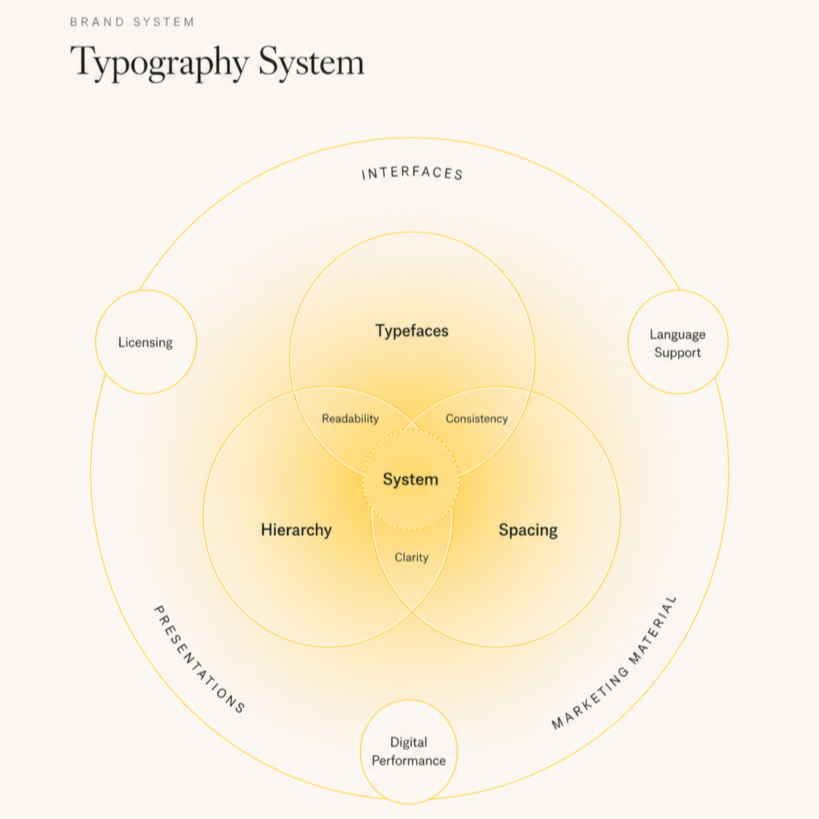
Typography affects personality and readability. The system should define typefaces, weights, hierarchy, spacing and usage across interfaces, presentations and marketing material.
A capable brand identity agency also considers licensing, language support and digital performance.
10. Illustration and Iconography
Custom illustrations and icons can simplify complex ideas while creating a recognisable visual language. Deliverables may include an illustration style, icon library, character system and composition rules.
Building Kaggle’s Illustration Library
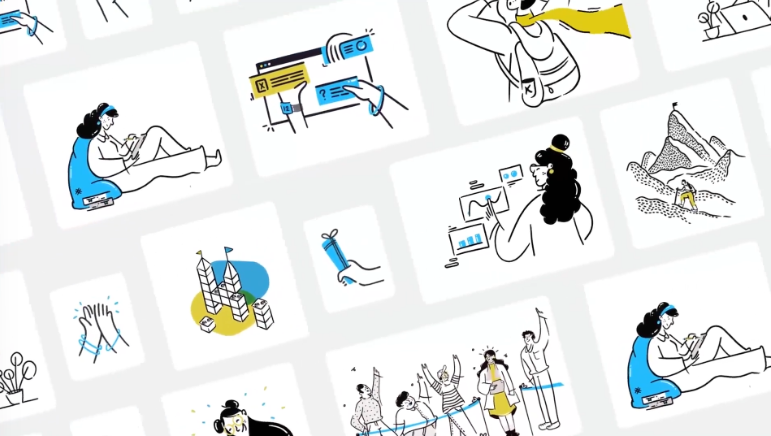
Kaggle partnered with Brucira to improve visual storytelling across its data science platform.
Brucira created more than 40 illustrations using organic forms, realistic elements and inclusive characters. The system made technical concepts more approachable while keeping the brand professional and recognisable.
Kaggle Visual Designer Chelsea Raerek said the team was “absolutely thrilled” and that Brucira captured its core brand personality while taking it further.
This shows how brand identity services can create a visual language for an entire platform.
11. Brand Applications and Templates
An identity should be tested through real applications before it is complete. These may include presentation templates, social posts, stationery, website sections, sales material, campaigns or product packaging.
Effective brand identity services prioritise common customer touchpoints and connect them with the brand marketing strategy.
12. Brand Guidelines and Rollout Support
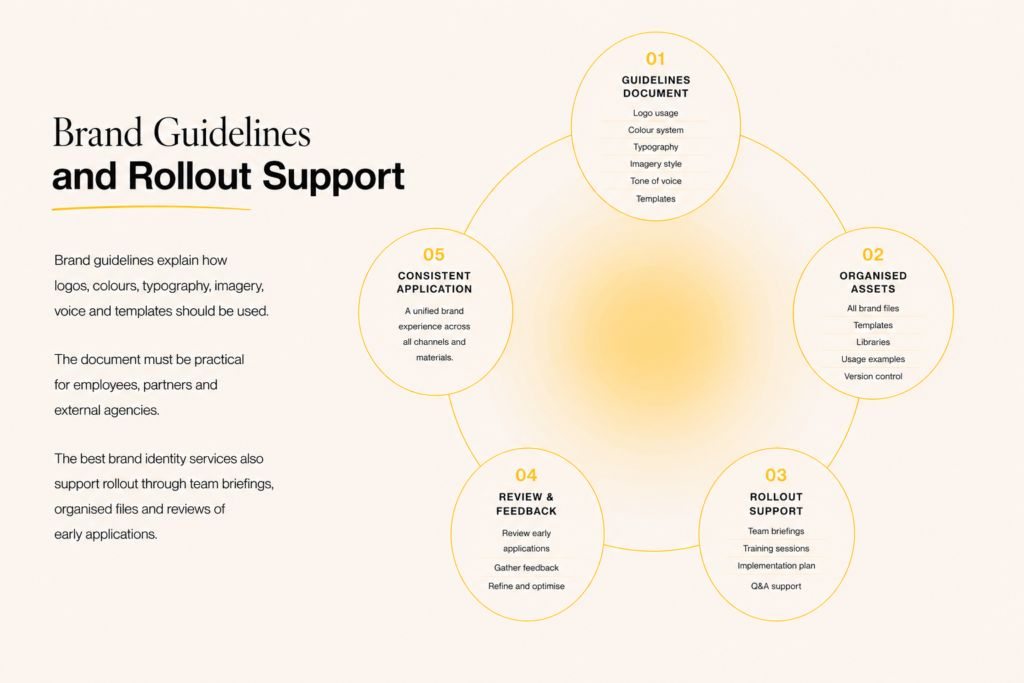
Brand guidelines explain how logos, colours, typography, imagery, voice and templates should be used.
The document must be practical for employees, partners and external agencies. The best brand identity services also support rollout through team briefings, organised files and reviews of early applications.
How to Choose a Brand Identity Design Agency
Look for a partner with both strategic and visual capability.
The agency should begin with research, explain the reasoning behind its decisions and show how the identity works across formats. Its portfolio should demonstrate complete systems rather than isolated logos.
The right brand identity services leave the business with clear positioning, practical assets and a scalable system.
Final Thoughts
Brand identity is not a logo created in isolation. It is the system through which a business becomes recognisable, communicates its value and builds familiarity.
The most effective brand identity services connect research, strategy, messaging and design across customer touchpoints. They make a business easier to understand, trust and remember.
Have a project in mind? Reach out to us at hello@brucira.com.
Want more insights? Browse our blogs here and explore our portfolio of projects.
FAQs
Q1: What do brand identity services include?
Brand identity services usually include research, strategy, positioning, messaging, tone of voice, logo design, colour, typography, imagery, templates and guidelines.
Q2: What is the difference between branding and brand identity?
Branding is the broader process of shaping how people perceive a business. Brand identity is the strategic, verbal and visual system used to express it.
Q3: Why are brand identity services important?
They help a company communicate consistently, distinguish itself from competitors and build recognition across websites, products, campaigns and customer communication.
Q4: How long does a brand identity project take?
A project may take several weeks or several months depending on research, stakeholder involvement, complexity and the number of required applications.
Q5: How do I choose a brand identity agency?
Choose a brand identity agency that combines research, strategy and design. Review its case studies, process and ability to create scalable systems across several touchpoints. Brucira offers end-to-end brand identity services that connect strategy, messaging and visual design into one cohesive system.