Most founders don’t burn their runway on bad ideas. They burn it building the right idea in the wrong order. The MVP vs prototype question comes down to sequencing, and getting it wrong costs months. Here are 7 steps to decide what to build first and what to budget for each.
1. Know What Each One Actually Proves
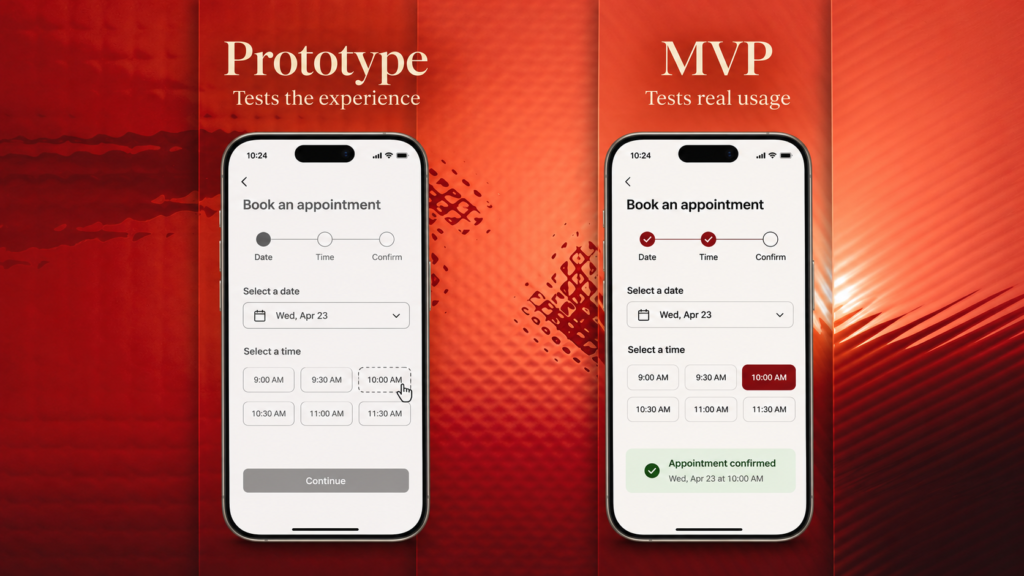
A prototype proves that people understand and want your solution. An MVP proves that they’ll use it, and ideally pay for it, when it’s real. A prototype is a simulation: screens, flows and clickable interactions with nothing running underneath. An MVP is working software with a deliberately small scope. Each answers a different question, so the first thing to settle in any MVP vs prototype debate is which question you can’t yet answer.
2. Start With Your Riskiest Assumption
List every assumption your product depends on, then circle the one that would kill the idea if it were wrong. If that risk is “will users get this flow?”, you need a prototype. If it’s “will they come back next week?”, only an MVP can tell you. Founders who skip this step usually build too much, too early. A short discovery sprint, the same one that opens a solid product design process, usually brings out the real risk in a few days.
How Brucira found the real problem for ICICI Lombard
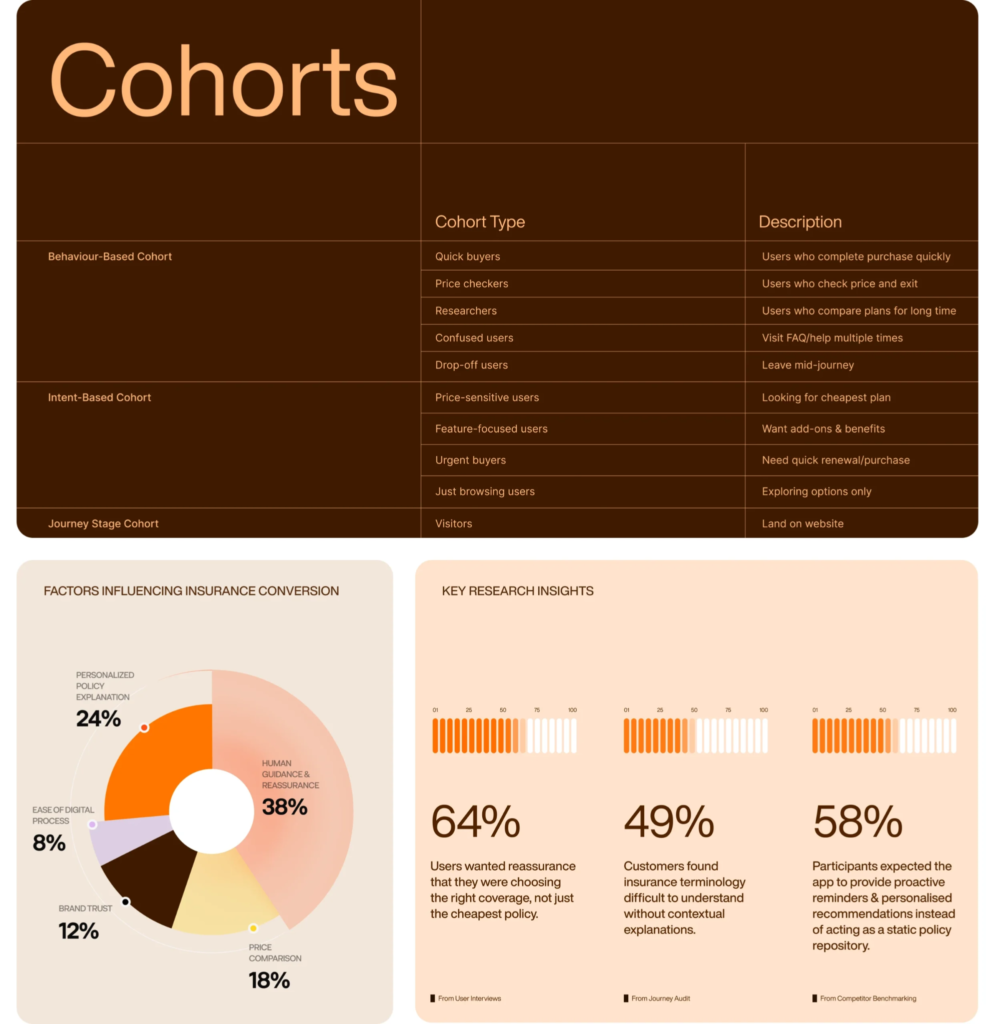
For ICICI Lombard, Brucira started with three months of discovery before designing anything. That meant stakeholder interviews, a UX audit, competitor analysis and journey mapping. The research turned up the real gap: offline advisors built trust at key decision points, and the online journey had nothing to replace them.
That finding shaped the work that followed: an AI insurance assistant, a post-purchase engagement layer and a modular design system. Name the riskiest assumption first, and the next thing to build becomes obvious.
3. Use a Figma Prototype to Test Flows Cheaply
For most digital products, a Figma prototype is the fastest way to put something realistic in front of users. You can link screens, add transitions and run five to eight usability sessions in a week. Watch where people hesitate, tap the wrong thing or ask “what does this do?” Fixing those moments in Figma takes hours. Fixing them in code takes sprints. Brucira’s prototyping and iterative testing work is built around this loop of testing, learning and refining before a developer touches the product.
4. Lean on Rapid Prototyping When Speed Matters
Rapid prototyping means building several quick, low-cost versions in a row, each designed to answer one question. Version one might be paper sketches. Version two, a clickable wireframe. Version three, a polished Figma flow. The aim is to learn fast, not to make it pretty. If you’re pitching investors soon or choosing between two product directions, a few rapid prototyping rounds will give you evidence much faster than a coded build.
5. Budget Realistically for Each
Costs vary by scope, region and team. As a rough guide:
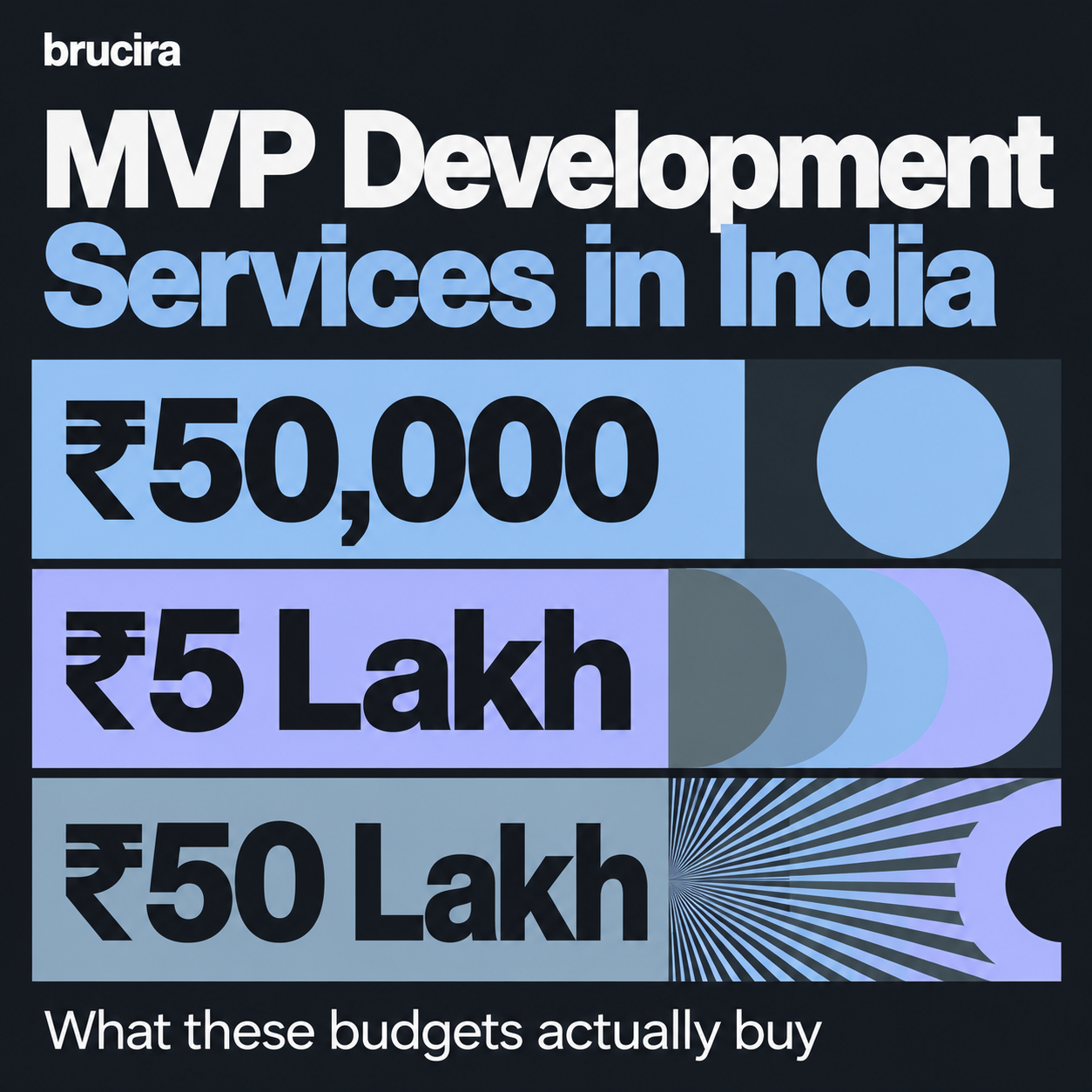
- Prototype: a clickable Figma prototype of core flows usually takes 1-4 weeks. With professional prototyping services in India, expect roughly ₹1-5 lakh depending on screen count and how many rounds of testing you include.
- MVP: a working product with a backend, auth and core features usually runs 2-4 months. In India that’s commonly ₹8-30 lakh. Global agency quotes often land between $25,000 and $100,000+.
The prototype is the cheap insurance policy that keeps the MVP budget from going to waste.
6. Move to an MVP When Usage Is the Question
Go to MVP once users consistently get through your prototype without help and you’ve stopped learning anything new from testing it. At that point the open questions are about behaviour over time: retention, willingness to pay, real-world edge cases. Scope ruthlessly. One core job, done well, beats five half-built features. Good product design services carry the validated prototype straight into build so nothing you learned gets lost in handoff.
How Brucira scoped a focused first build for TorqWars
For TorqWars, a Mumbai RC racing brand, Brucira built a custom Shopify storefront in 8 weeks. It focused on two jobs: helping newcomers understand why a hobby-grade car isn’t a toy, and getting returning racers to buy quickly.
That’s MVP scoping in practice. The team made one clear call on who the first build serves and what it has to do, then put the time into making those flows work well rather than adding extra features.
7. Don’t Treat the Prototype as Throwaway
Even if not one line of prototype code survives, the prototype’s decisions should. User flows, information architecture, copy and interaction patterns should all feed straight into the MVP’s design specs. Teams that start from scratch at build time end up paying for discovery twice. Keep your test notes, document what changed and why, and give developers the final validated flows instead of the first draft.
Final Thoughts
The MVP vs prototype choice is about order, not about which one wins. Prototype to prove the experience makes sense, build an MVP to prove people will use it, and fund each step only once the one before it has paid off.
Have a product idea you want to validate? Reach out to Brucira at hello@brucira.com. For more on product design, visit our blog at blog.brucira.com, or see what we’ve built at brucira.com/work.
FAQs
Q1: What is the main difference in MVP vs prototype?
A prototype simulates your product so you can test whether users understand and want it. An MVP is a working, minimal version that real users can actually use. Prototypes test the experience. MVPs test behaviour and demand.
Q2: Should I build a prototype before an MVP?
In most cases, yes. A prototype is far cheaper to change, so it catches usability and concept problems before they get built into code. The exception is when the experience is already well proven and your only open question is demand.
Q3: What do prototyping services usually include?
Professional prototyping services usually cover user flows, wireframes, a high-fidelity interactive prototype and rounds of usability testing with real users. Many also include a findings report and refined designs that are ready for development.
Q4: Is a Figma prototype enough to show investors?
Often, yes. A polished Figma prototype shows your vision and core flows convincingly, especially at pre-seed. Pair it with user-testing insights so investors see evidence and not just good-looking screens.
Q5: How is rapid prototyping different from regular prototyping?
Rapid prototyping puts speed and iteration ahead of polish. You build several quick versions, each testing one question, and refine between rounds. It’s ideal early on, when you’re still choosing a direction for your product design services brief.
Ready to work out what to build first? Talk to Brucira.