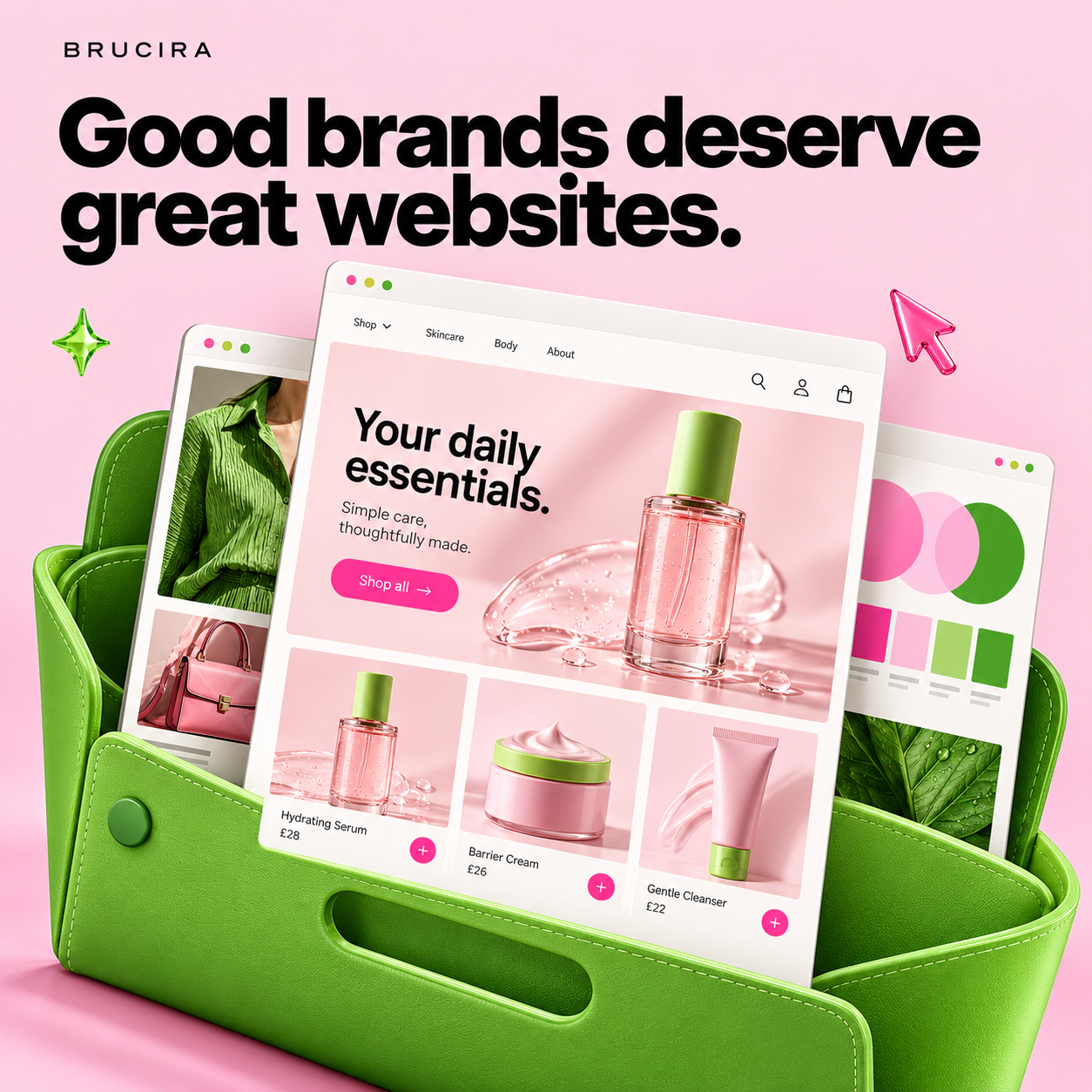





Ever wondered what separates a good designer from a great one? It’s rarely just raw talent with a mouse or a moodboard. The graphic design skills that matter most combine creativity with communication, collaboration and logical thinking, the qualities that let designers solve real problems instead of just decorating them. We asked the designers at Brucira which five skills they’d tell any aspiring designer to build first.

1. Communication
Effective communication is one of the most valuable graphic design skills, because design rarely happens in isolation. Designers need to understand the brief, ask the right questions and explain how their work supports the wider business goal.
This cuts both ways: designers must give clear, actionable feedback and be able to receive it without getting defensive. Without that, projects stall and stakeholders lose confidence in the process. Explaining a decision, why a layout, colour or typeface was chosen, is part of what a graphic designer does beyond producing visuals. It’s how designers build trust with clients, developers and copywriters on every project.
2. Being a Team Player
No designer works alone. Even freelancers collaborate with clients, developers, marketers and copywriters to bring an idea to life. Being a reliable team player (patient, accountable and generous with feedback) is one of the most practical skills any designer can develop.
Anyone researching how to become a graphic designer should take teamwork as seriously as their portfolio. Strong work gets you in the door, but collaboration determines how well you perform once you’re inside it. The same is true for anyone exploring how to become a web designer or how to become a UX designer: both roles depend on working closely with developers, researchers and product teams from day one.
3. Openness
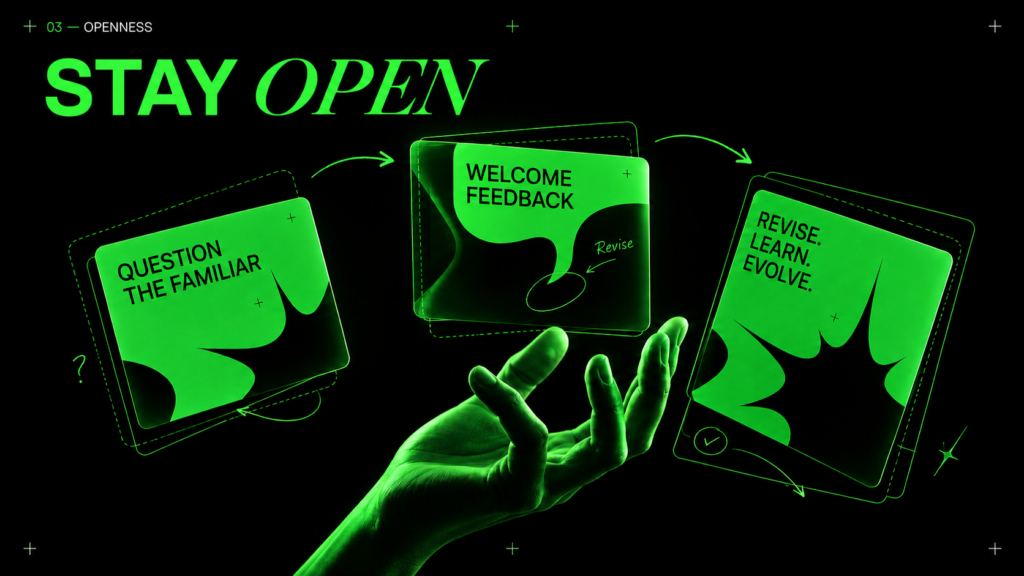
Good design comes from curiosity and a willingness to question the familiar. Designers who stay open to new tools, trends and feedback tend to produce more useful work than those who default to what’s worked before.
Openness also means resilience. The first draft rarely survives client review untouched, and strong graphic designer skills include knowing when to defend an idea and when to let it go. Staying current matters too: keeping typography and layout conventions fresh is part of why openness supports a long design career rather than a short one.
4. Creativity
Creativity is the most recognisable skill on this list, and it shows up in everything from brand identities to social content to packaging. But creativity in a professional context is not unlimited: the work still has to serve the audience, communicate the right message and hold up across formats.
It can also be trained. Studying strong design, building personal projects and revisiting brand strategy and positioning fundamentals all sharpen a designer’s instincts over time.
How Brucira Rebuilt Mivi’s Brand Identity
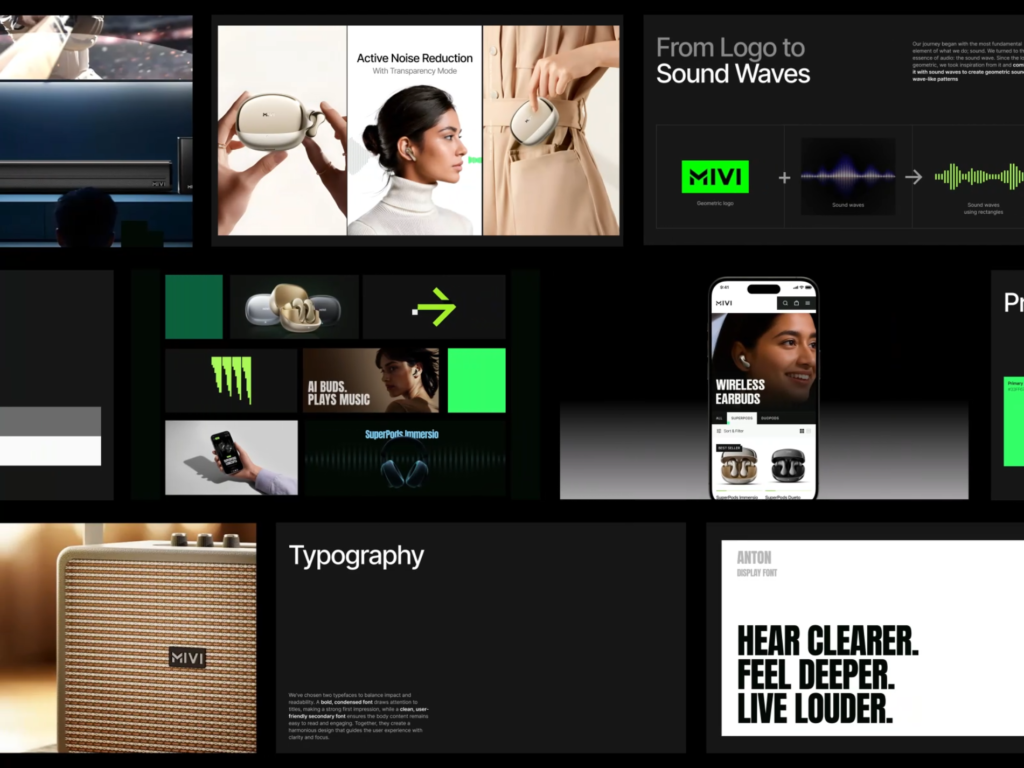
When Mivi needed a digital identity that matched its ambitions as one of India’s leading audio tech brands, Brucira built a bold visual system around soundwave-inspired motifs, neon accents and confident typography, then carried it consistently across the website, Amazon listings and social assets. It’s a good example of creativity working inside real constraints: the brand had to look distinctive and stay recognisable to a mobile-first, younger audience at every touchpoint.
5. Logical Thinking
Creativity gets designers noticed, but logical thinking is what makes design actually work. How will someone understand this layout? What should they do next? What might stop them from finishing an action? Answering these questions is central to graphic design skills, because it pushes designers past decoration and into problem-solving.
This is where creativity and logic meet, and it’s just as true across the wider product design process as it is in a single poster or landing page: the underlying reasoning has to hold up before the visuals do.
How Brucira Simplified Tech Data’s Multi-Cloud Platform
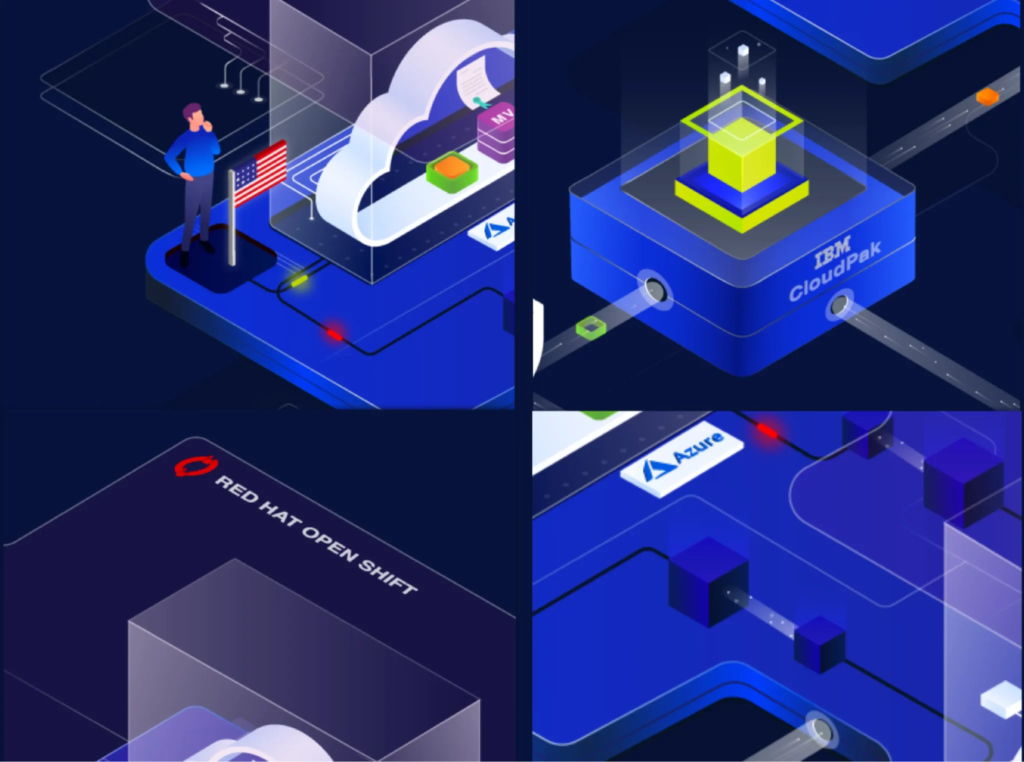
Tech Data needed to explain a genuinely complex idea, how its platform connects virtual machines across AWS, Azure and IBM Cloud, without losing the audience. Brucira mapped the concept with storyboards, secured sign-off on a static version before animating anything, then built an interactive landing page using isometric illustration and motion. Both Tech Data and IBM praised how clearly it communicated a technical process, replacing what would have been a lengthy explainer video. That’s logical thinking and creative skill working together: structure first, polish second.
Final Thoughts
These five graphic design skills, communication, teamwork, openness, creativity and logical thinking, aren’t a checklist to tick off once. They’re habits that compound over a career, whichever direction it takes: pure graphic design, web design, UX or product design. Keep practising them, stay curious, and the rest tends to follow.
Have a graphic design project in mind? Reach out to Brucira at hello@brucira.com, browse more on the Brucira blog, or see the work itself on our portfolio.
FAQs
Q1: What Are the Most Important Graphic Design Skills?
The most important graphic design skills are visual communication, typography, layout, creativity, logical thinking, collaboration and the ability to give and receive feedback well. These graphic designer skills matter more than mastering any single piece of software, and they transfer across every design specialism.
Q2: What Do Graphic Designers Do?
People asking what do graphic designers do are often surprised how much of the role is not visual: designers research, interpret briefs, present concepts and defend decisions, alongside creating brand identities, marketing assets, packaging and digital interfaces. Understanding what does a graphic designer do means looking past the final file.
Q3: How Do I Become a Graphic Designer?
To become a graphic designer, start with core principles like typography, hierarchy and colour, then build a portfolio that shows your process, not just your output. Anyone serious about how to become a graphic designer should also practise explaining their work out loud.
Q4: What Skills Does a Web Designer Need?
Web designer skills include responsive layout, digital typography, accessibility and an understanding of how pages are actually built. Someone exploring how to become a web designer benefits from a strong visual foundation plus a working knowledge of usability.
Q5: What Is the Difference Between a Graphic Designer, a UX Designer and a Product Designer?
A graphic designer focuses mainly on visual communication. Someone researching how to become a UX designer will spend more time on research, information architecture and usability testing. And what does a product designer do? Usually a mix of both, plus prototyping and product strategy. Have a project that spans any of these? Get in touch with Brucira.