





Branding, marketing and advertising are often used as though they mean the same thing. They do not. For startups, confusing them leads to unclear messaging, inconsistent customer experiences and money spent before the foundations are ready, which is exactly where brand marketing is meant to step in.
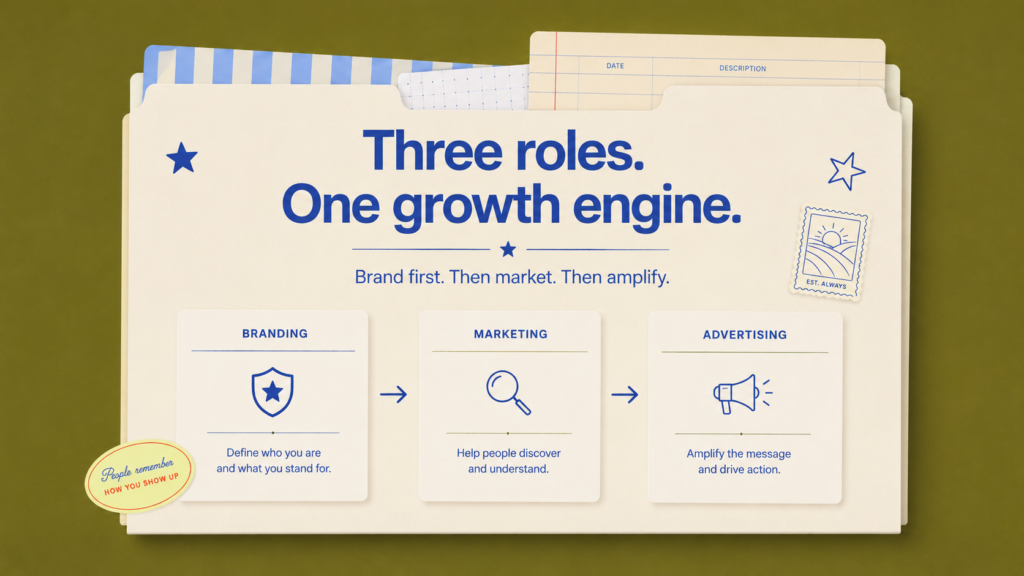
The simplest way to understand the difference: branding defines who you are, marketing helps people discover and understand you, and advertising pays to place your message in front of them. All three matter, but they perform different roles. For sustainable growth, brand marketing must connect them rather than treating them as separate activities.
1. Why Startups Often Get It Wrong
Early-stage teams usually work with limited time, small budgets and pressure to grow quickly. So the process often looks like this: create a logo, set up social media, run some ads, hope people respond. These are tactics without a clear foundation.
Without a defined brand strategy, marketing messages can change from one campaign to the next. Without clear brand positioning, advertising may reach people but fail to give them a reason to care. This is where brand marketing becomes important: effective brand marketing connects what a company stands for with how it communicates and grows, creating recognition before repeatedly asking customers to buy.
2. Branding Is Who You Are
Branding defines your identity, purpose, personality and promise. It includes your mission and values, visual identity, tone of voice, customer promise, brand positioning, messaging, and the experience people associate with you, as we cover in more depth in why branding is more than just a logo.
A strong brand answers a few questions: Why do we exist? Who are we for? What makes us different? How should people feel when they interact with us? Your brand strategy brings these answers together.
How Brucira Shaped Brand Identity for RazorpayX
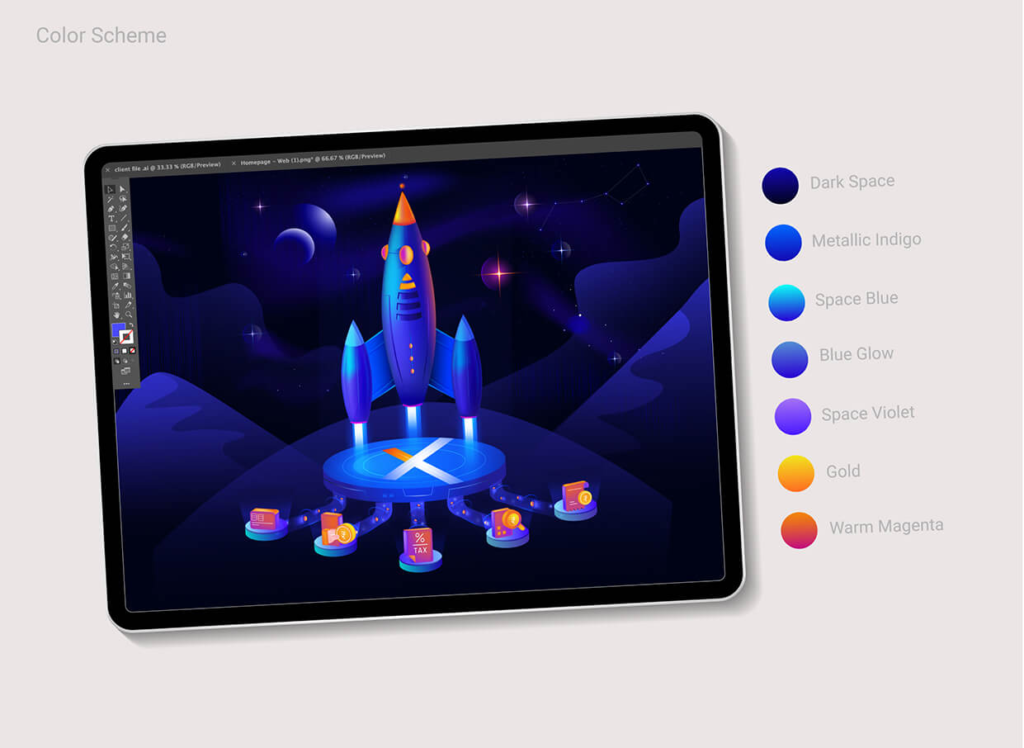
We saw this directly while redesigning the landing page and visual identity for RazorpayX, Razorpay’s business banking product. The brief was not to run a campaign, it was to give a fintech product a visual language, illustration style and iconography people could recognise and trust before any ad or email ever reached them.
That is the sequence brand strategy is meant to protect. Identity comes first, so that every piece of marketing and every ad dollar afterward reinforces the same idea instead of inventing a new one each time.
3. Marketing Is How You Reach People
Marketing includes the activities used to attract, engage and convert an audience: audience research, content marketing, social media, email campaigns, SEO, events, partnerships, community building and product launches.
Marketing and advertising overlap, but they are not interchangeable. Marketing includes both organic and paid ways of reaching customers, which is the main source of confusion for early-stage teams trying to plan a brand marketing strategy.
4. Advertising Is Paid Amplification
So, what is advertising? A simple advertising definition is the paid promotion of a product, service or message through selected media channels: Google Ads, Instagram and Facebook ads, LinkedIn campaigns, display banners, sponsored content, influencer partnerships, and print or outdoor campaigns.
The difference between marketing and advertising is that marketing covers the broader strategy for reaching and engaging an audience, while advertising is the paid part of that strategy.
5. Where Brand Marketing Fits In
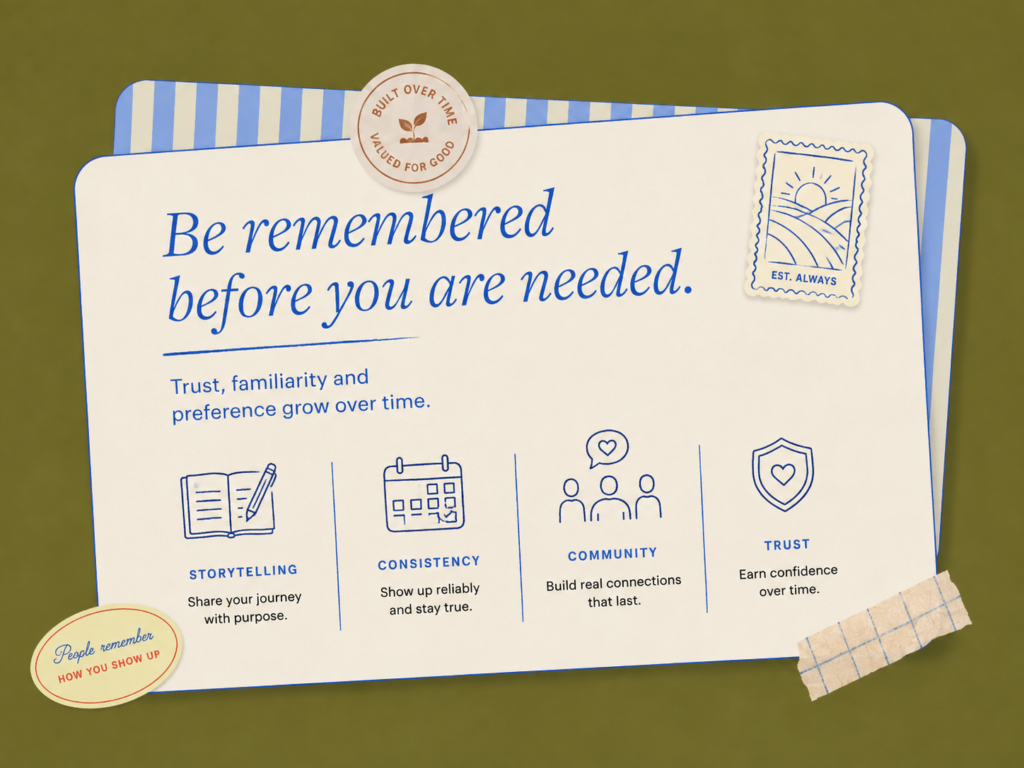
Brand marketing focuses on promoting the overall brand rather than only pushing an individual product or offer. Product marketing says, “Buy this product because it solves this problem.” Brand marketing asks, “Why should people recognise, trust and choose this company?”
A strong brand marketing strategy builds familiarity over time through educational content, founder storytelling, social media campaigns, community initiatives, design consistency, thought leadership, customer stories and brand-led advertising. The purpose of brand marketing is not always immediate conversion. Sometimes the goal is to improve recognition, strengthen trust or shape perception before a customer is ready to buy.
6. How Branding Shapes Marketing and Advertising
Branding provides the direction. Marketing carries that direction across channels. Advertising amplifies selected messages.
Imagine a startup positioning itself as the simplest financial platform for first-time investors. Its brand positioning strategy might focus on accessibility, confidence and clarity, and that direction should influence the language on the website, the visual identity, the topics covered in blogs, the onboarding experience, social media content and advertising campaigns. Without that alignment, a brand can communicate simplicity on Instagram but feel confusing inside the product. Strong brand marketing prevents that disconnect by connecting the promise with the actual experience.
7. What Is Brand Awareness?
Brand awareness describes how familiar people are with a brand and how easily they recognise or recall it. It can range from basic recognition, such as thinking “I have seen this company before,” to stronger recall, where someone thinks “This is the company I think of when I need this type of product.”
A brand awareness strategy helps startups become more recognisable through consistent messaging, design and visibility: useful content, memorable visual systems, social media consistency, partnerships, public relations, customer referrals, community building and targeted advertising. Brand awareness does not mean appearing everywhere. It means being remembered by the right people for the right reason.
How Brucira Used a Retail Roadmap to Build Brand Awareness for skuIQ

This played out in our work with skuIQ, where we illustrated a 10-point retail roadmap designed to drive retailer engagement. The goal was not a single campaign asset. It was a way of repeatedly presenting the same core ideas in a format retailers would actually recognise and return to.
That is what a working brand awareness strategy looks like in practice: the same message shown consistently enough, in a useful enough format, that it earns recall rather than just impressions.
8. Brand Marketing Examples
A few well-known brand marketing examples show how branding, marketing and advertising work together. Airbnb built its identity around belonging, and that idea influences its messaging, platform experience, photography and campaigns. Slack positioned workplace communication as simpler and more human, with its tone, product experience and marketing all supporting that promise. Glossier built its brand around community and customer participation, using social media and user-generated content to build awareness before paid campaigns amplified its reach.
These branding examples work because the campaigns are connected to a clear identity. The advertisements do not invent a new personality every time. They reinforce an existing one, the same way our brand identity work aims to give every future campaign a foundation to build on.
9. What Happens When Startups Skip the Foundation?
Startups often invest in advertising first because it offers visible, immediate numbers: clicks, impressions and conversions, measured quickly. But advertising cannot fix an unclear offer or inconsistent identity.
Without strong brand marketing, startups may see weak brand recall, inconsistent messaging, low customer trust, high acquisition costs, poor retention and campaigns that attract the wrong audience. Advertising may generate traffic, but the website, messaging and product still have to convince people to stay. Brand marketing should not be treated as a decorative step. It gives every customer acquisition activity a clearer direction.
10. What Should Startups Prioritise?
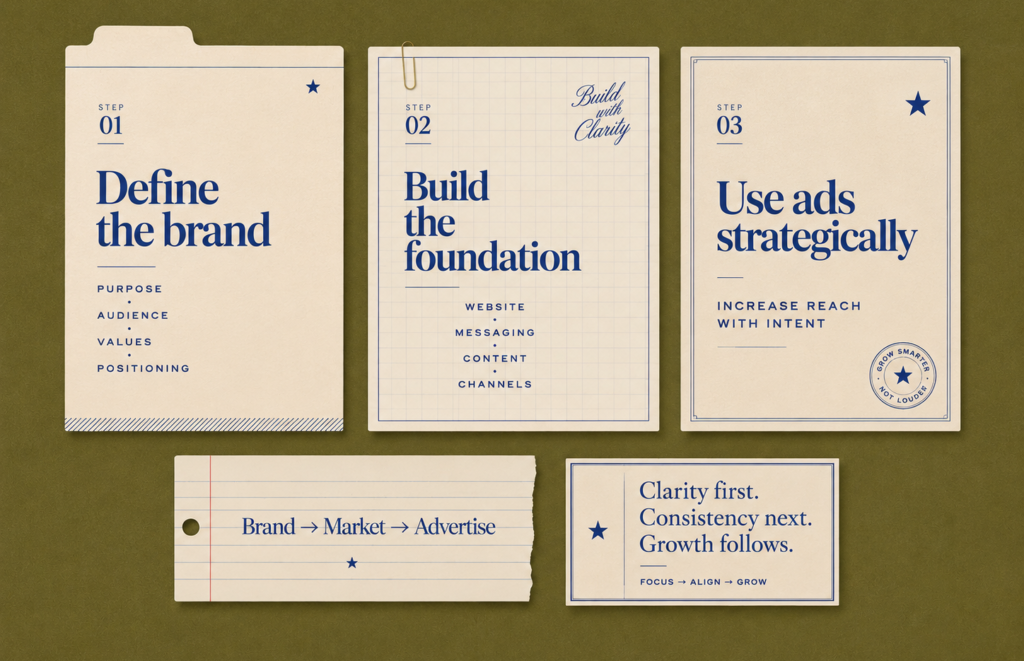
The right sequence is usually simple.
Define the brand. Clarify your purpose, audience, values, personality and positioning. This forms the brand strategy behind every future decision.
Build the marketing foundation. Create the website, messaging, content and channels needed to reach your audience. Your brand marketing strategy should explain how the identity will appear consistently across these channels.
Use advertising strategically. Once you understand which messages resonate, use advertising to increase reach and drive action.
This does not mean startups need a large branding exercise before doing any marketing. It means the fundamentals should be clear enough that every activity moves in the same direction.
Final Thoughts
Branding, marketing and advertising are connected, but they are not the same. Your brand defines who you are. Marketing builds the relationship. Advertising increases visibility. Brand marketing connects all three by making sure people repeatedly see, understand and remember the same core idea.
Start with clarity. Then build awareness. Then use advertising to amplify what is already working.
Have a brand marketing project in mind? Reach out to Brucira at hello@brucira.com. You can also browse more thinking on the Brucira blog or see our work in the Brucira portfolio.
Frequently Asked Questions
Q1: What is brand marketing?
Brand marketing is the process of promoting a company’s overall identity, values and positioning rather than focusing only on individual products or short-term sales. A good brand marketing strategy builds recognition and trust over time, so every campaign afterward has something consistent to build on.
Q2: What is the difference between marketing and advertising?
Marketing includes all the activities used to understand, reach and engage customers, both organic and paid. Advertising is the paid promotion of selected messages through specific channels, which makes it one part of a broader marketing and advertising plan rather than a synonym for it.
Q3: What is brand strategy?
A brand strategy defines the brand’s audience, positioning, personality, purpose, messaging and long-term direction. It is the foundation that keeps branding and marketing strategy aligned as a startup adds more channels and campaigns.
Q4: What is brand awareness?
Brand awareness is the extent to which people recognise or recall a brand. A consistent brand awareness strategy, built on repeated messaging and design, helps the right audience remember the company for the right reason.
Q5: Should startups invest in branding or advertising first?
Start with the brand foundation and marketing message. Once the positioning and customer experience are clear, advertising can be used to amplify them more effectively rather than covering for a message that has not been defined yet.
Have more questions about building your brand marketing strategy? Get in touch with Brucira.