Most D2C brands don’t fail because of a bad product. They fail because the store, the packaging and the brand feel like three different companies. Choosing the right ecommerce website design company fixes that, and choosing the wrong one costs you months. Here are 8 things to check before you sign.
1. Look for D2C experience, not just a pretty portfolio
A beautiful portfolio tells you an agency can make things look good. It doesn’t tell you whether they understand cart abandonment, repeat purchase or the economics of a ₹600 average order value. Ask for D2C work specifically, and ask what changed for the business after launch. An ecommerce website design agency that has shipped for consumer brands will talk about conversion and retention without being prompted. One that hasn’t will talk about aesthetics.
Avoid: agencies whose D2C “experience” is one landing page from 2019.
2. Check that brand comes before the website
Your website is where your brand gets tested hardest, but it shouldn’t be where your brand gets invented. A good partner starts with positioning and brand strategy, so every page, product card and email speaks in the same voice. If an agency jumps straight to wireframes, the site will look polished and say nothing.
How Brucira brought Mivi’s brand personality into its ecommerce website
Mivi needed a website that reflected its bold, tech-first identity while making its audio products easier to discover. Brucira began with competitor research and a clear visual direction, then used product imagery, typography and sound-inspired graphics to bring that personality into the website. The direction also extended to Amazon listings and social media creatives.
For D2C founders, the takeaway is to look for an agency that can explain how its website decisions connect to your brand. Colours, layouts and imagery should express a shared idea, giving customers a consistent experience wherever they discover your products.
3. Make sure they can handle packaging too
For a D2C brand, the unboxing is a brand touchpoint, and so is the product shot on your PDP. If your packaging design agency and your web team never talk, the colours, type and tone drift apart. Look for a partner who either does both or insists on a shared system across both.
4. Ask how they design for conversion
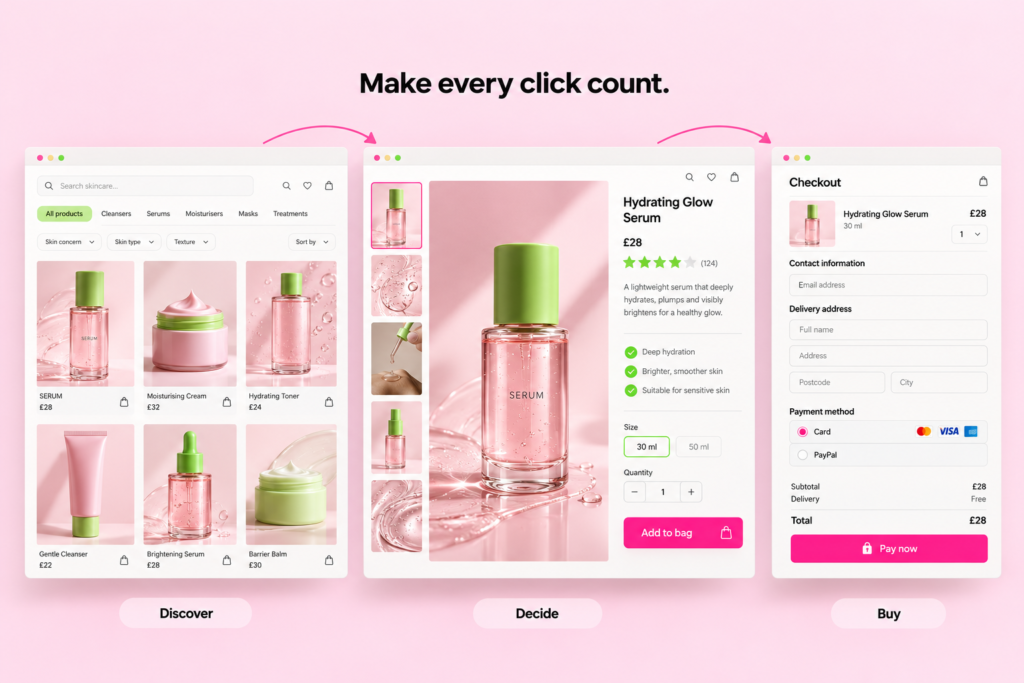
Every ecommerce website design company will promise conversions. Ask how. Good answers involve research, UX and UI design grounded in real user behaviour, and testing before launch. Bad answers involve “best practices” and a template. Ask to see how they’ve handled product discovery, filters, PDP hierarchy and checkout friction on a past project.
5. Confirm they can build what they design
A design handoff that your developers can’t build is just a nice PDF. Check whether the agency offers web development in-house or works closely with an ecommerce website development company that does. If you’re on Shopify, ask whether they’ve worked alongside a Shopify development agency, or can build themes themselves. Platform constraints should shape the design from day one, not get discovered in week eight.
6. Look for a system, not a set of pages
D2C brands launch new SKUs, collections and campaigns constantly. If your agency delivers 12 static pages, every new launch becomes a new design project. Ask for components, guidelines and reusable templates so your in-house team can move fast without breaking the brand. This is also where a clear set of brand identity deliverables earns its keep.
How Brucira evolved Miss Mosa’s brand and website
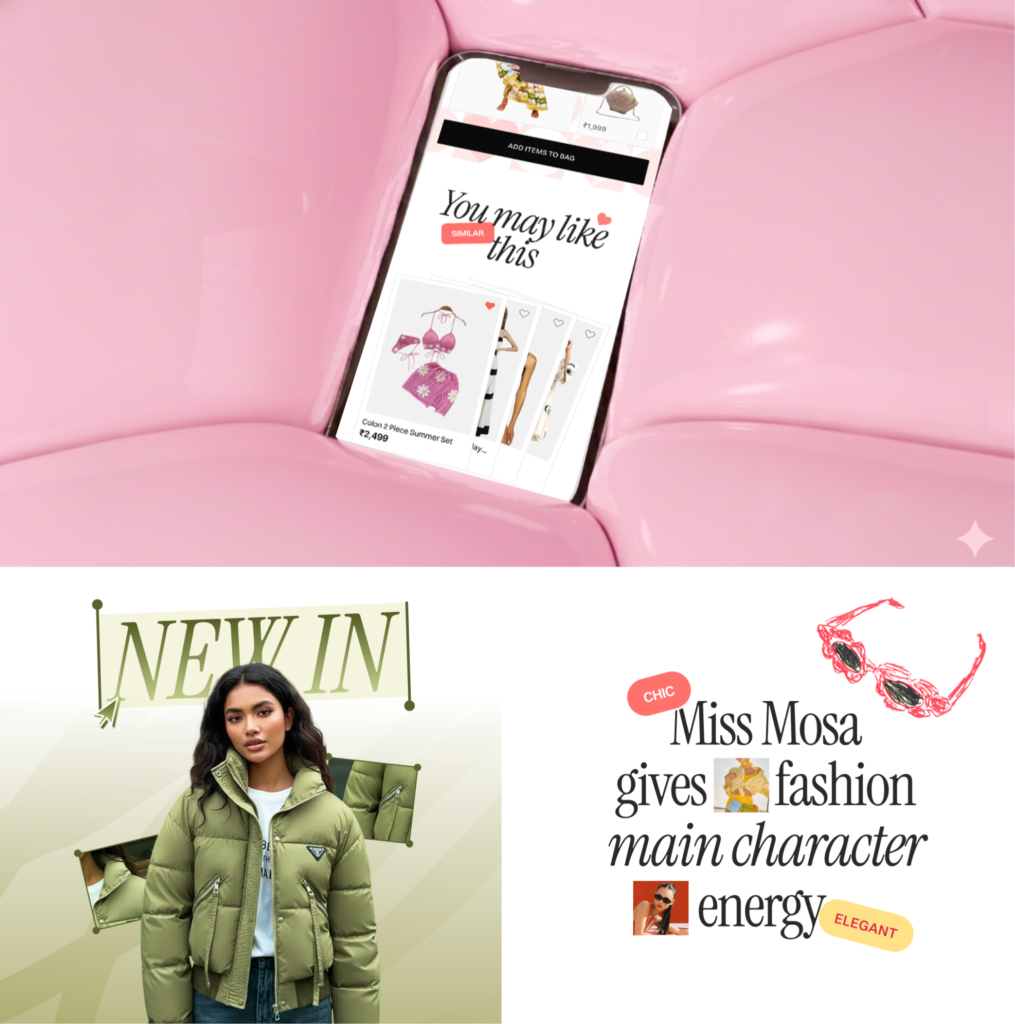
Miss Mosa, formerly A la Mode by Akanksha, needed its identity to grow into a confident, contemporary fashion brand. Brucira handled the branding, illustration and website as one connected piece of work.
That’s the takeaway for a growing D2C label: a rename or repositioning only lands if the website, visuals and content all change together, built on one system rather than patched page by page.
7. Watch for these red flags
- No discovery or research phase in the proposal
- Fixed price quoted before they’ve asked about your customers
- Portfolio full of concepts, light on shipped work
- No mention of mobile, even though most D2C traffic in India is mobile
- Vague answers on who owns files, code and source designs after launch
Any one of these is worth a follow-up question. Three of them is a reason to walk away.
8. Judge the process, not the pitch
The pitch deck shows you their best day. The process shows you every other day. Ask how often you’ll review work, who you’ll actually talk to, and how they handle feedback rounds. A good ecommerce website design company will show you how they audit, test and iterate, ideally with something like a structured UX audit built in.
Final Thoughts
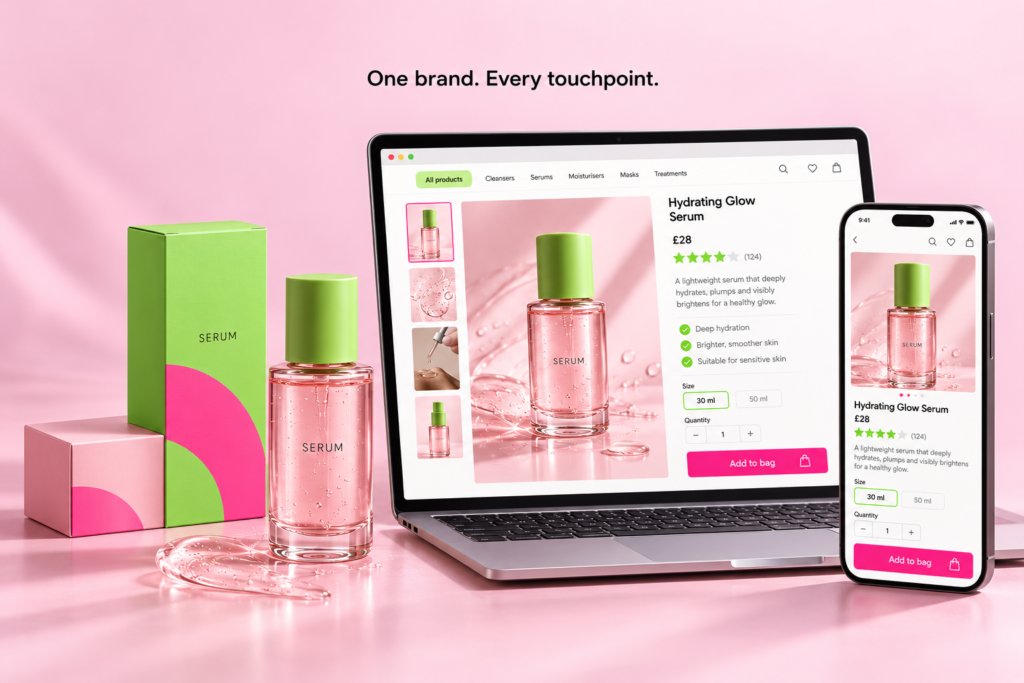
The right D2C design partner connects brand, packaging, website and build into one system that keeps working after launch. Check for real D2C experience, conversion thinking and the ability to ship, and walk away from agencies that skip research or sell templates.
Have a D2C brand or ecommerce website project in mind? Reach out to Brucira at hello@brucira.com. For more on design and branding, visit our blog, or see our recent work at brucira.com/work.
FAQs
Q1: What does a D2C design agency do?
A D2C design agency shapes how a direct-to-consumer brand looks and sells online: brand identity, packaging, website design and often development. The best ones treat these as one system, so the brand feels consistent from ad to unboxing.
Q2: How do I choose an ecommerce website design company in India?
Look for shipped D2C work, a research-led process, conversion thinking and the ability to build what they design. Ask for outcomes from past projects, not just screenshots.
Q3: Should I hire an ecommerce website design agency or an ecommerce website development company?
If your brand and UX need work, start with design. If your design is solid and you just need it built or migrated, a development company may be enough. Many D2C brands get the best result from a partner that does both.
Q4: Do I need a separate packaging design agency?
Not necessarily. If your design partner handles packaging and digital together, you avoid the brand drift that comes from two teams working in isolation.
Q5: Should my D2C website be built by a Shopify development agency?
If you’re on Shopify, your designers and developers both need to understand its theme and app limits. Whether that’s one Shopify development agency or a design studio with Shopify experience, make sure platform constraints are planned for from the start.
Ready to build a D2C brand that sells as good as it looks? Talk to Brucira.